January 2026
Dear Members,
As I write this, it’s that time again when we reflect on the year just past while putting in place plans for the year ahead. And right in the centre of all this, we find ourselves in the middle of a dinki-di honey flow. Across Victoria, beekeepers have been doing what we do best, rolling up our sleeves, chasing the flow, managing weather, bees and time. All this while still finding space for our dear family and friends over Christmas and New Year.
Finally found top gear.
Talking with beekeepers right across the state, there’s a quiet sense that we might have finally found top gear this summer. Like my good friend Leon’s Kenworth with his 18-speed Road Ranger, it feels as though we’ve clicked up a notch. A magnificent red gum flow has delivered some much-needed momentum. Rainfall is down, but more consistent than last year. Post-red gum, there are some promising prospects in Central Victoria on ironbark Eucalyptus tricarpa and grey box Eucalyptus microcarpa, with potential for high-quality pollen and nectar flows in the north-east and south-east of the state.
Flows like this keep us going.
There’s something special about passing another beekeeper on the road at this time of year… the nod, the wave, the shared beekeeping experience. We know what it takes to be here. It’s flows like this that keep us going. Like that one great golf shot in a round that brings you back again, a real honey flow reminds us why we love doing what we do.
The Victorian Apiarists’ Association is something special, too. We are the peak body for apiculture in Victoria, and that matters. As a collective, Victorian beekeepers pollinate roughly one-third of the food produced in the state. When you really stop and think about it, that’s a relatively small group of beekeepers who underpin billions of dollars of agricultural production. It’s extraordinary. It’s a responsibility we carry with pride.
Last month I outlined several key projects the VAA is progressing to support members and strengthen our industry. I’d like to expand on a few of them here.
VAA Education and Communications Project.
In September, the VAA was successful in securing two grants from the DEECA Livestock Biosecurity Education Fund. One of these supports the development of enhanced, beekeeper-led biosecurity education across Victoria. Importantly, the project also reviews how bee-keepers currently access education and information, and how they would prefer to receive it, particularly as the original industry-funded T2M program comes to an end.
This work is being delivered through our VAA Education and Communications (EdComm) Project. The committee includes commercial, sideliner and recreational beekeepers, a researcher and people with expertise in education, education technology, communications, social media and marketing.
Just before Christmas, the committee met in person
to review plans for 2026 and to hear from two independent consultants, both with specialised experience in the apiculture sector. Their analysis was thorough and encouraging. They identified strong foundations to build on, as well as clear opportunities to improve how we educate, communicate and connect. This project is about shaping a consistent, beekeeper-led approach that supports the VAA’s one home, one voice, one guardian purpose. We’ll continue to share updates as this work progresses and invite members to contribute feedback as we do a proper ―brood inspection‖ of how we deliver education and communications in Victoria.
2026 Conference and AGM.
Planning is well underway for the VAA 2026 Conference and AGM. As announced in December, to improve accessibility for all members from all regions, the conference will be held at the Novotel Melbourne Airport, across Friday and Saturday, with the welcoming evening on the Thursday. Dates are 4th, 5th, 6th June 2026.
We know how important it is to come together, to share knowledge, challenge ideas and reconnect as beekeepers. We’re finalising speakers now and expect to release a detailed program in February. We’ve already secured several outstanding presenters from Australia and overseas, and we’re confident this will be another strong, practical and engaging conference.
The conference committee will soon begin discussions with industry partners about sponsorship opportunities. Accommodation will be available at both the Novotel and the adjoining Ibis, with special rates to be communicated shortly. The venue sits adjacent to Terminal 4 at Melbourne Airport and offers ample parking, making travel straightforward.
Peer-to-Peer Support Program – Commercial Beekeepers.
In December, we also announced a new peer-to-peer support initiative for commercial beekeepers, a project we are approaching with genuine intent. There’s no question that running a commercial beekeeping business is becoming more complex, more demanding, and more expensive. The spread of varroa destructor represents one of the greatest challenges our industry has ever faced.
In partnership with Agriculture Victoria, the VAA recognises that an effective response to varroa requires more than technical advice alone. It also means supporting the people doing the work. The VAA board was united in its support for this initiative, and we are now building the core team who will help deliver it.
This program is about practical, grassroots support – beekeepers supporting beekeepers. It will not only create space to talk about mite washes and treatment thresholds but also about trucks breaking down, flat tyres, tough seasons and uncertainty. Many of us have kept bees a certain way for a long time, and now, in many respects, we are learning again. We love our bees, we care deeply about their welfare, and we are committed to doing the work required to get through this together.
Training will be provided to peer-support volunteers to help them understand stress, mental health first aid, and how to support others while managing their own wellbeing. Further information will be shared in the coming weeks. I sincerely thank Brett Harrison from Agriculture Victoria for initiating this work, along with Vicki Elliott and Matt Lorenz for first raising this issue and taking the lead in the initial planning phase.
Supporting our members, strengthening our industry.
As we head into 2026, I want to acknowledge the many people who make the VAA what it is. We value the strong relationships we have with government and regulatory agencies, and the collaboration and information-sharing that occurs throughout the year. We also benefit greatly from our involvement with AHBIC and our close working relationships with other state beekeeping associations.
To our Australian Bee Journal advertisers, conference sponsors and event partners, thank you! Your support in 2025 helped deliver record-breaking outcomes at our conference and at the Melbourne Royal Show, and we look forward to working with you again in 2026.
I also want to thank the VAA Board for their commitment and leadership. This is a board prepared to make decisions, continually improve and to place a clear stake in the ground for Victorian beekeepers thoughtfully, deliberately, and with purpose. Beyond the board, we are fortunate to have a large network of branches, sections and affiliate clubs across the state, and a strong mix of experienced beekeepers, mentors, elders and emerging leaders who want the best for apiculture in Victoria.
Thank you.
Finally, a thank you to you, our members. For 134 years, the VAA has represented Victorian beekeepers. It is an honour to do so, especially during this time of challenge and change.
We’re beekeepers. We’re a community. We’ve faced hard times before, and we’ve come through them by sticking together.
Looking forward to a fantastic 2026.
Kind regards
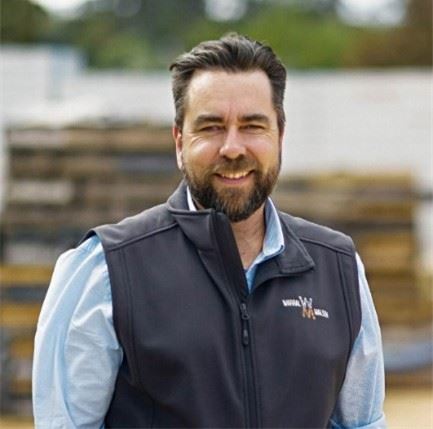
Lindsay Callaway
VAA President